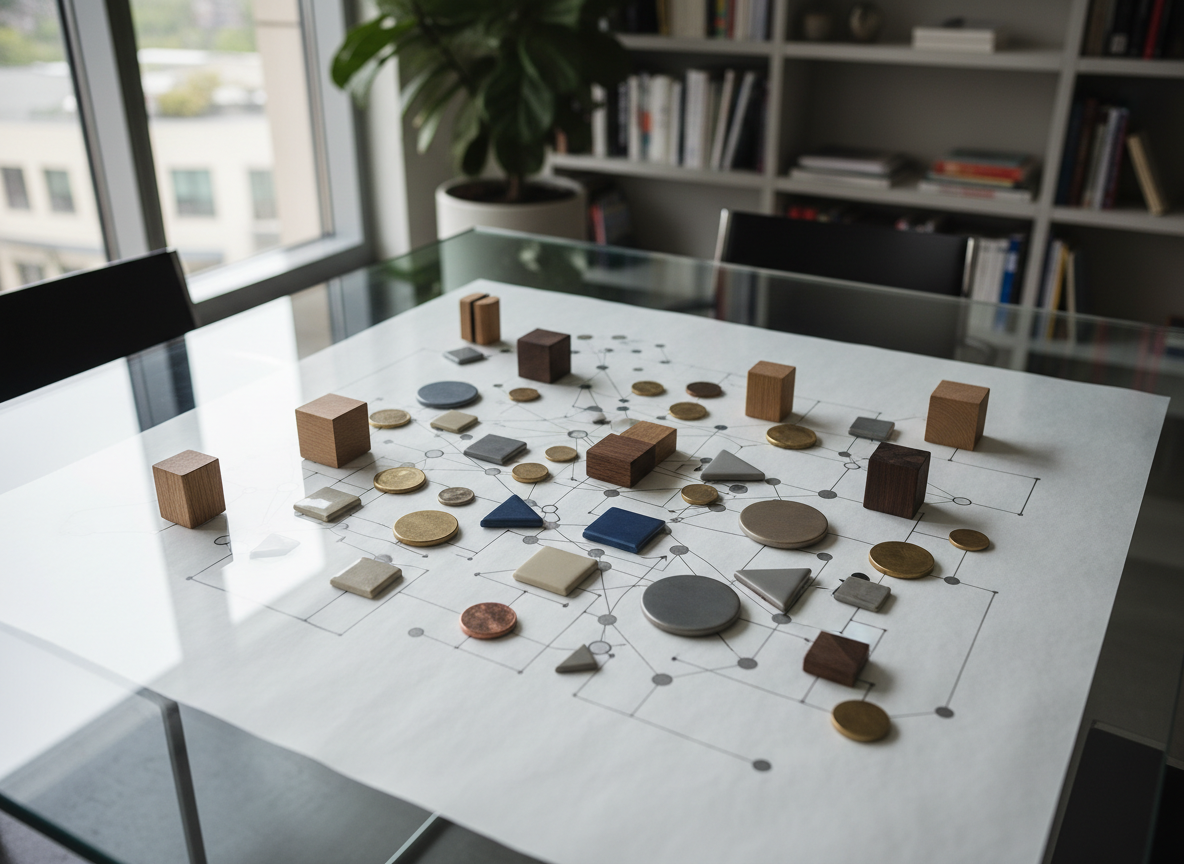
A large transparent glass table seen from slightly above, its surface covered with a deliberate constellation of small, differently shaped wooden blocks, metal tokens, and smooth ceramic tiles, each in muted, sophisticated tones of slate, sand, and deep blue. Fine connecting lines are hand-drawn in graphite directly onto a large sheet of white paper beneath the objects, forming a complex network. No text appears anywhere. Cool, diffused daylight enters from a nearby floor-to-ceiling window, reflecting softly off the glass and metal. The room around is an understated modern workspace with blurred bookshelves and a single leafy plant far in the background. Photographic realism with sharp focus on the central cluster and gentle bokeh at the edges, creating an editorial, contemplative atmosphere about mapping complex people decisions.

Why ASTRELLIO

Independent, rigorous guidance on people decisions, grounded in research, editorial integrity, and practical experience.

About

ASTRELLIO is an independent knowledge platform for serious people decisions, blending research, practice, and clear thinking. We publish uncompromised analysis and practical frameworks. Explore the About page to see how and why we stay independent.

An overhead photographic view of a carefully organized decision-making workspace, laid out on a broad, pale oak table. In the center sits a large sheet of heavyweight white paper divided into quadrants by thin pencil lines, with clusters of neutral-toned tokens—small stones, wooden discs, and matte metal pieces—placed purposefully in each section. Nearby lie a pair of simple black reading glasses, an uncapped fine-liner pen, and a ceramic cup of tea on a stone coaster. Soft morning light from a side window creates delicate shadows from each object, emphasizing their placement and depth. The composition follows the rule of thirds, crisp focus across the frame, giving a clear, editorial feeling of structured analysis and quietly rigorous thinking around complex people decisions, without any literal charts or text.

Editorial Team

A minimalist, high-end conference table rendered in photographic realism, shot from a low, cinematic angle along its surface. At the far end of the table rests a single closed linen-covered notebook in a warm gray tone, beside a slim matte-black fountain pen and a small arrangement of geometric stone paperweights. Subtle color-coded sticky tabs peek from the notebook’s edge, suggesting structured thinking without revealing any words. Soft, indirect afternoon light filters through sheer curtains, creating a quiet gradient across the table’s wood grain and faint reflections in its finish. The surrounding room is mostly negative space, with blurred architectural lines suggesting a modern office tower. The atmosphere is poised, reflective, and sophisticated, symbolizing the gravity and discretion of senior-level people decisions.

Aarav Sharma

An abstract, carefully arranged desktop scene representing thoughtful people decisions, without any human presence. At the center, a stack of heavyweight cream index cards is spread in a loose grid, each card showing only faint embossed geometric shapes instead of text. Around them, a dark graphite pencil, a slim sand timer with fine white sand, and a single polished river stone rest on a matte charcoal desk. Soft overcast daylight from a large unseen window washes in from the left, casting gentle, elongated shadows and subtle reflections. Shot at eye level with a shallow depth of field, the front cards crisp and the background suggestion of a bookshelf blurred. The mood is calm, analytical, and sophisticated, in clean photographic realism, evoking careful, evidence-based decision-making.

Mateo García

A large transparent glass table seen from slightly above, its surface covered with a deliberate constellation of small, differently shaped wooden blocks, metal tokens, and smooth ceramic tiles, each in muted, sophisticated tones of slate, sand, and deep blue. Fine connecting lines are hand-drawn in graphite directly onto a large sheet of white paper beneath the objects, forming a complex network. No text appears anywhere. Cool, diffused daylight enters from a nearby floor-to-ceiling window, reflecting softly off the glass and metal. The room around is an understated modern workspace with blurred bookshelves and a single leafy plant far in the background. Photographic realism with sharp focus on the central cluster and gentle bokeh at the edges, creating an editorial, contemplative atmosphere about mapping complex people decisions.

Zuri Ndlovu

An overhead photographic view of a carefully organized decision-making workspace, laid out on a broad, pale oak table. In the center sits a large sheet of heavyweight white paper divided into quadrants by thin pencil lines, with clusters of neutral-toned tokens—small stones, wooden discs, and matte metal pieces—placed purposefully in each section. Nearby lie a pair of simple black reading glasses, an uncapped fine-liner pen, and a ceramic cup of tea on a stone coaster. Soft morning light from a side window creates delicate shadows from each object, emphasizing their placement and depth. The composition follows the rule of thirds, crisp focus across the frame, giving a clear, editorial feeling of structured analysis and quietly rigorous thinking around complex people decisions, without any literal charts or text.

Leila Haddad

Reviews

A minimalist, high-end conference table rendered in photographic realism, shot from a low, cinematic angle along its surface. At the far end of the table rests a single closed linen-covered notebook in a warm gray tone, beside a slim matte-black fountain pen and a small arrangement of geometric stone paperweights. Subtle color-coded sticky tabs peek from the notebook’s edge, suggesting structured thinking without revealing any words. Soft, indirect afternoon light filters through sheer curtains, creating a quiet gradient across the table’s wood grain and faint reflections in its finish. The surrounding room is mostly negative space, with blurred architectural lines suggesting a modern office tower. The atmosphere is poised, reflective, and sophisticated, symbolizing the gravity and discretion of senior-level people decisions.

Aya Nakamura

ASTRELLIO has become my first stop for complex people decisions—independent, deeply researched, and written for leaders, not vendors.

An abstract, carefully arranged desktop scene representing thoughtful people decisions, without any human presence. At the center, a stack of heavyweight cream index cards is spread in a loose grid, each card showing only faint embossed geometric shapes instead of text. Around them, a dark graphite pencil, a slim sand timer with fine white sand, and a single polished river stone rest on a matte charcoal desk. Soft overcast daylight from a large unseen window washes in from the left, casting gentle, elongated shadows and subtle reflections. Shot at eye level with a shallow depth of field, the front cards crisp and the background suggestion of a bookshelf blurred. The mood is calm, analytical, and sophisticated, in clean photographic realism, evoking careful, evidence-based decision-making.

Mateo García

Our executive team uses ASTRELLIO articles to stress-test people strategies before we commit—clear, balanced, and refreshingly free from software agendas.